Subaru WRX STI Rally Build Parts List: What You Need to Know
TL;DR: A proper Subaru WRX STI rally build requires stage rally suspension (8-10" travel), skid plates, roll cage, fire suppression, racing seats with 6-point harnesses, and engine protection like an oil cooler and closed-deck block. Budget $15,000-25,000 for a competitive stage rally build on top of the base car.
Safety Equipment (Non-Negotiable)
Safety equipment isn't optional in rally - it's mandated by sanctioning bodies and will save your life. Don't cheap out here. Roll Cage You need a proper FIA-spec or SCCA-legal weld-in roll cage. Bolt-in cages don't meet most rally regulations and won't protect you in a serious off. Expect to pay $3,000-5,000 for the cage plus installation. Popular manufacturers include Custom Cages, Safety Devices, and Kirk Racing. The cage needs to tie into the subframe mounting points and include door bars, a roof X-brace, and proper padding. Fire Suppression System An automatic fire suppression system is mandatory in most rally classes. The SPA Technique AFFF system is the gold standard, running about $1,200-1,500. It needs to cover the engine bay, cockpit, and fuel cell area with proper nozzle placement. Racing Seats and Harnesses You need FIA-approved racing seats with 6-point harnesses. Sparco, Recaro, and OMP make seats specifically designed for rally use with extra side bolstering. Budget $1,500-2,500 for a pair of seats plus $400-600 for harnesses. The seats need to mount to the cage, not the factory floor pan. Window Nets and Safety Glass Driver and passenger window nets are required, along with a lexan rear window to prevent glass from entering the cockpit during a rollover. Some events require side windows to be replaced with lexan as well.Rally Suspension and Handling
Rally suspension is completely different from track or street setups. You need massive wheel travel and the ability to absorb huge impacts without bottoming out. Rally-Specific Coilovers You need coilovers designed for rally with 8-10 inches of travel. DG Spec, Ohlins, and Reiger make proper rally suspension for the STI. Expect to spend $4,000-8,000 for a quality setup. These aren't your typical street coilovers - they're designed to handle 4-foot jumps and keep working. The damping needs to be rebound-heavy to control the car on landing, and the spring rates are typically softer than track setups to maintain traction on loose surfaces. Most rally STI builds run around 400-500 lb/in front springs and 350-450 lb/in rear. Rally Wheels and Tires You need wheels that can take a beating. Method Race Wheels, Sparco, and fifteen52 make rally-specific wheels in 15" or 17" sizes. Smaller diameter wheels give you more sidewall to absorb impacts. Budget $1,200-2,000 for a set of wheels. For tires, Pirelli, Michelin, and DMack make proper rally tires. You'll need different compounds for different surfaces - soft compound for gravel, medium for mixed surfaces, hard for abrasive stages. A set of four rally tires runs $800-1,200. Upgraded Sway Bars and Links Rally cars need adjustable sway bars to tune handling for different surfaces. Whiteline and STI make adjustable sway bars specifically for the platform. You'll also need heavy-duty end links that won't break during hard landings.Engine and Drivetrain Protection
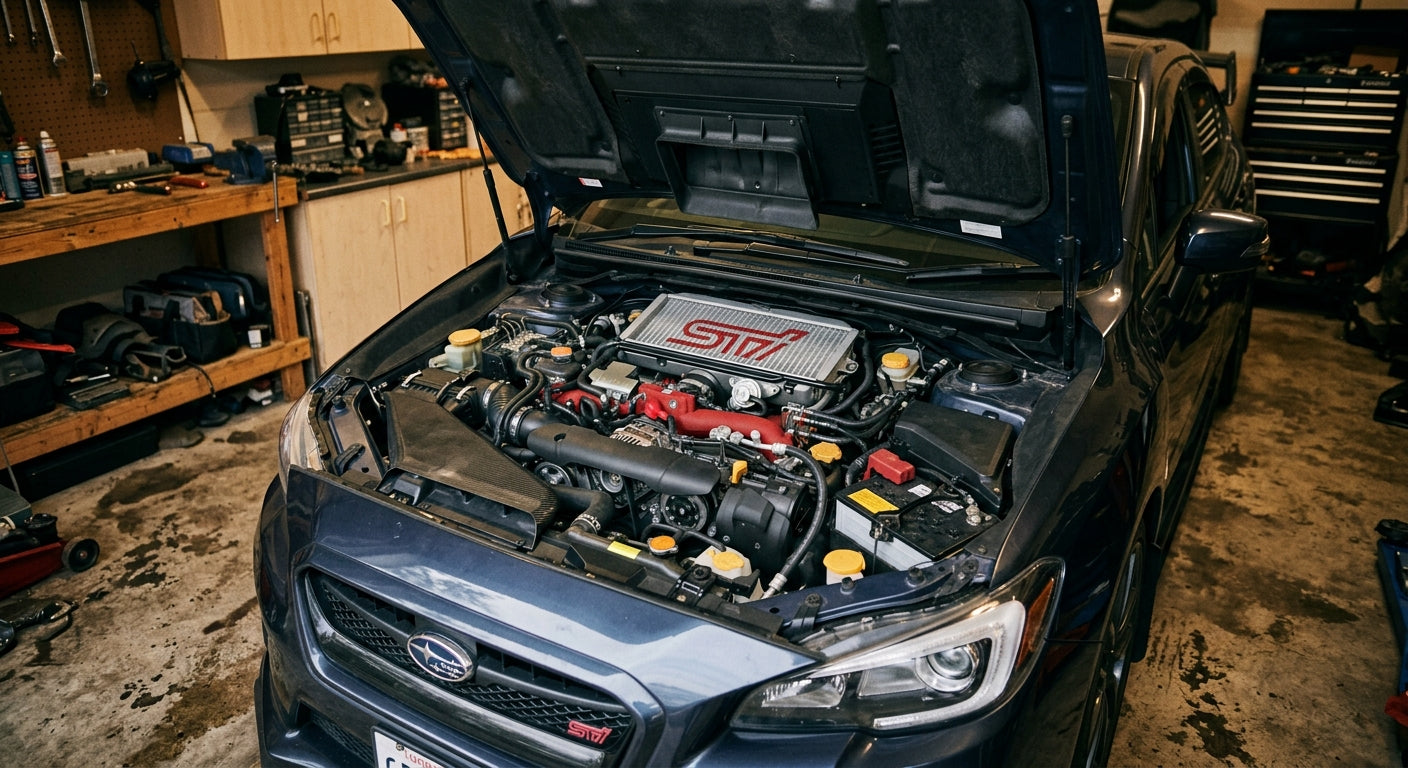
The EJ257 in the STI is strong, but rally puts unique stresses on the engine that require specific modifications. Oil System Upgrades An oil cooler is mandatory for rally use. The Perrin or Mishimoto oil cooler kits work well and cost around $400-600. You also need a proper oil pan baffle or dry sump system to prevent oil starvation during long airborne sections. The Killer B Motorsport oil pan and pickup are popular choices at around $800. Closed Deck Block or Sleeves For serious rally use, many builders sleeve the block or swap to a closed-deck EJ257. The open-deck design can crack cylinder walls under the repeated heat cycles and stress of rally driving. A sleeve job runs $2,000-3,000, while a closed-deck short block is $5,000-8,000. Transmission and Differential The 6-speed transmission in the STI is generally reliable for rally use, but you should upgrade the clutch to handle the abuse. A competition clutch from Exedy or Competition Clutch runs $800-1,200. Some builders also add a transmission cooler for longer stages. The center and rear differentials usually hold up well, but changing fluids frequently is critical. Motul 75W-90 gear oil is a good choice for rally use. Exhaust System You need an exhaust that can handle impacts without getting crushed. A tucked-up design like the Invidia or Borla rally-specific exhausts keeps the pipes protected. Budget $600-1,000 for a proper rally exhaust.Exterior Protection and Aerodynamics
Rally cars take a beating from rocks, branches, and occasional encounters with trees. Protection is key. Skid Plates You need full underbody protection including engine, transmission, fuel tank, and differential skid plates. Rally Armor makes comprehensive skid plate kits for the STI platform. Expect to spend $1,500-2,500 for complete underbody protection. The plates should be aluminum or steel, not plastic. Body Protection Door panel protectors, rock guards, and fender protection help prevent expensive body damage. Many rally teams use Tyvek or similar materials for temporary protection during events. Aerodynamics A proper rally car needs aerodynamic balance. A front splitter and rear wing help maintain stability at speed. The wing needs to be mounted to the cage or reinforced mounting points, not just the trunk lid.Interior and Driver Safety
The interior of a rally car is stripped down to essentials and built around safety and function. Intercom System Clear communication with your co-driver is critical. A proper rally intercom system with noise-canceling capabilities runs $800-1,500. Popular brands include Stilo, Bell, and Peltor. Navigation Equipment You need rally computers, trip meters, and mounting systems for pace notes. Brantz and Terratrip make the standard equipment used in rally. Budget $1,000-2,000 for a complete navigation setup. Interior Safety All interior panels need to be either removed or covered with fire-resistant material. Sharp edges must be padded, and anything that could come loose during a roll needs to be secured or removed.Budget Breakdown by Category
Here's a realistic budget breakdown for a competitive stage rally STI build: Safety Equipment: $8,000-12,000Build Timeline and Priority Order
Build your rally STI in this order to avoid having to redo work: 1. Safety first - Cage installation requires everything else to be planned around it 2. Suspension - Major changes to ride height affect everything else 3. Engine protection - Do internal engine work before cage installation if possible 4. Exterior protection - Skid plates and body work 5. Interior finishing - Navigation, intercom, final safety details Plan on 6-12 months for a complete build if you're doing the work yourself, or 3-6 months if paying a shop. The cage work alone typically takes 1-2 weeks.Frequently Asked Questions
What year WRX STI is best for rally builds?
The 2004-2007 STI is the most popular choice for rally builds due to the proven EJ257 engine, strong transmission, and excellent aftermarket support. The 2008-2014 models work well too but have slightly different suspension geometry. Avoid 2015+ FA20 engine models for serious rally use due to limited aftermarket support and unproven durability.
Can I build a rally STI on a budget?
A truly competitive stage rally STI requires significant investment in safety equipment that can't be compromised. For rallycross or less serious use, you can build a fun car for $5,000-10,000 in modifications, but don't expect it to meet stage rally safety requirements or survive serious competition.
Do I need a professional builder for my rally STI?
The cage work should be done by a certified fabricator experienced in rally builds. Engine work, suspension, and other modifications can be done by a competent home mechanic with proper tools. However, having a professional rally shop do the complete build ensures everything is done correctly and safely.
How much horsepower do I need for rally?
A stock STI (300hp) has plenty of power for most rally use. More power isn't always better in rally - reliability, torque delivery, and handling are more important than peak horsepower. Most competitive rally STIs run 300-400hp with emphasis on a flat torque curve and bulletproof reliability.
共有:
Mazda RX-7 FD3S 13B Rotary Rebuild Build: What You Need to Know
2Jz Supra Street Build 500Hp: What You Need to Know