Is A Standalone ECU Worth It: What You Need to Know
TL;DR: A standalone ECU is worth it if you're making 50+ horsepower over stock, running forced induction, or need features your factory ECU can't provide. Expect to spend $2,000-5,000 total including tuning for a proper setup that delivers reliable performance gains and advanced engine protection.
What Is A Standalone ECU
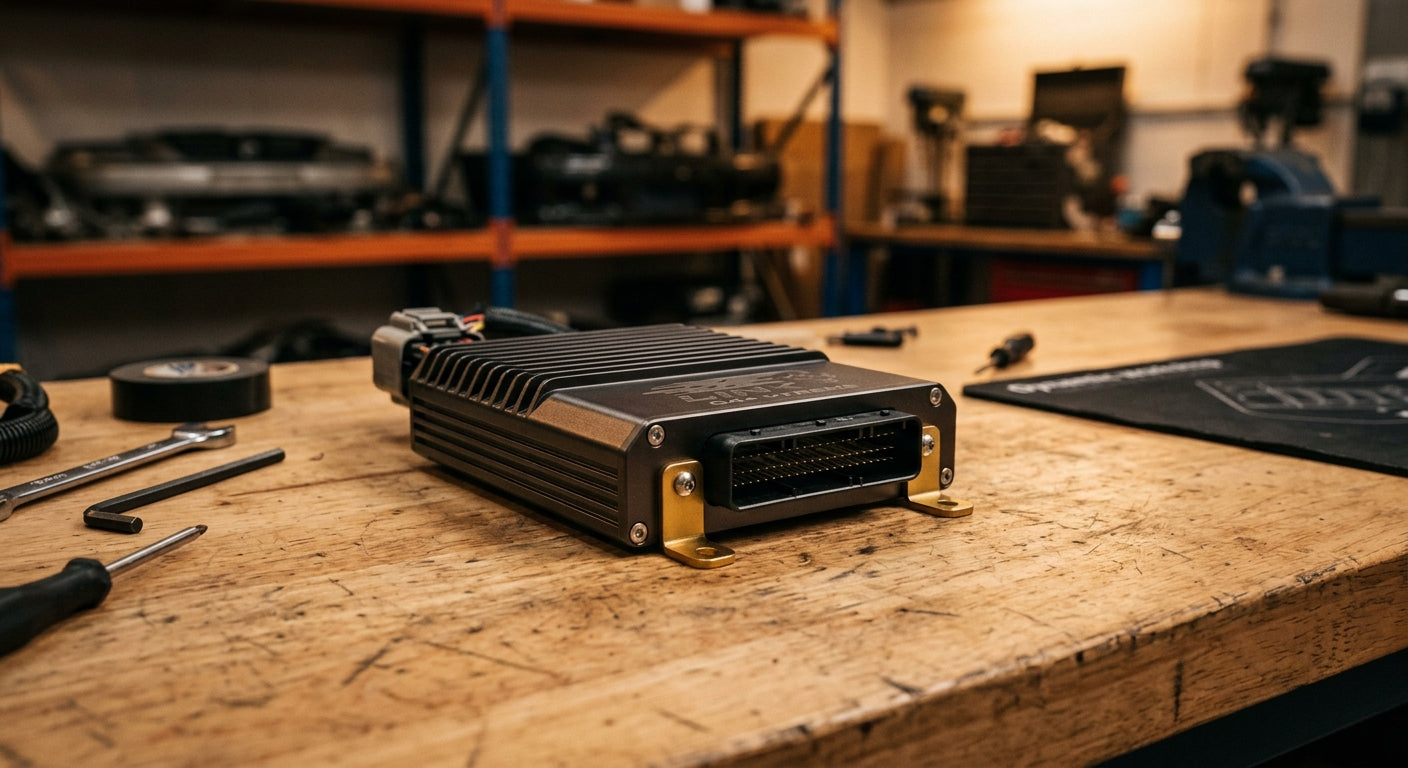
A standalone ECU replaces your factory engine management system with a programmable aftermarket unit. Unlike piggyback systems that modify factory signals, a standalone completely takes over fuel, ignition, and boost control from your original ECU.
The factory ECU in your car is designed for emissions compliance, fuel economy, and driving comfort across a wide range of conditions. It's programmed with conservative timing maps and fuel curves that prioritize longevity over performance. A standalone ECU removes these limitations, giving you complete control over how your engine runs.
Modern standalone systems like the Haltech Elite series or AEM Infinity can manage everything from basic port injection to complex multi-port direct injection setups. They handle variable cam timing, electronic throttle control, and advanced knock detection that puts factory systems to shame.
The key difference is customization. Your factory ECU follows predetermined maps that can't be significantly altered. A standalone ECU runs custom maps tailored specifically to your engine's modifications, fuel system, and performance goals.
When A Standalone ECU Is Worth It
You need a standalone ECU when your modifications exceed what the factory ECU can safely manage. This happens sooner than most people think.
Forced Induction Applications
Adding a turbo or supercharger to a naturally aspirated engine almost always requires standalone management. The factory ECU has no maps for boost conditions and will either run dangerously lean or activate limp mode. Even factory turbocharged cars benefit from standalone control when you increase boost pressure beyond stock levels.
Significant Power Increases
Once you're making 50+ horsepower over stock, the factory ECU starts becoming a limitation. It can't compensate for larger injectors, different airflow characteristics, or the timing adjustments needed for race fuel. We've seen stock ECUs cause lean conditions that destroy engines when pushed beyond their design parameters.
Engine Swaps
Swapping a different engine into your chassis requires standalone management unless you're using the complete donor harness and ECU. Even then, you'll likely need custom tuning to optimize for your specific setup.
Race Fuel and High Compression
Running E85, race gas, or high compression builds demands precise control over fuel delivery and ignition timing. Factory ECUs lack the resolution and flexibility to properly tune these setups.
Advanced Features
Standalone ECUs offer features like launch control, anti-lag, boost control, and data logging that simply don't exist in factory systems. These aren't just performance gimmicks – they provide real competitive advantages on track.
Cost Breakdown: What You'll Really Pay
The ECU itself is just the beginning. Here's what a complete standalone setup actually costs:
Entry Level ($2,000-3,500 total)
AEM EMS-4 ($1,200) + harness ($400) + sensors ($300) + tuning ($800-1,500) = $2,700-3,400. This covers basic engine management for mild builds up to about 400hp.
Mid Range ($3,500-5,000 total)
Haltech Elite 1500 ($1,800) + terminated harness ($600) + wideband O2 ($400) + additional sensors ($300) + professional tuning ($1,500-2,000) = $4,600-5,100. This handles most street and track applications reliably.
High End ($5,000-8,000+ total)
MoTeC M150 ($4,000) + harness and sensors ($1,000) + professional tuning with dyno time ($2,000-3,000) = $7,000-8,000+. This covers race applications, complex engine setups, and maximum flexibility.
Don't forget ongoing costs. You'll need retuning whenever you change parts ($300-600 per session), and race applications often require data analysis support ($200-400 per event).
The tuning cost varies dramatically based on complexity. A basic naturally aspirated setup might need 4-6 dyno hours, while a complex turbo build with variable cam timing could require 12-15 hours to dial in properly.
Popular Standalone ECU Options
Haltech Elite Series
The Elite 1500 and 2500 dominate the street performance market for good reason. They offer excellent value with features like integrated wideband controllers, CAN connectivity, and user-friendly tuning software. The Elite 2500 handles up to 12 injectors and 8 ignition outputs, covering most applications.
Real-world pricing puts the Elite 1500 around $1,800 with basic I/O, while the Elite 2500 runs $2,400. Both include comprehensive tuning software and strong technical support.
AEM Infinity Series
AEM's Infinity platform excels in OEM integration. Their plug-and-play harnesses for popular platforms like Honda K-series, Subaru EJ/FA, and Nissan SR20/RB26 make installation straightforward. The Infinity-8 handles most builds under 600hp, while the Infinity-10 manages complex setups with drive-by-wire throttle control.
Expect $2,200-2,800 for an Infinity system with proper harness and sensors. AEM's tuning software is intuitive, making it popular with tuners who work on multiple platforms.
Link ECU Series
Link offers excellent value in their G4+ lineup. The Thunder ($1,400) and Storm ($1,800) provide solid performance for street builds, while the Fury ($2,200) handles advanced race applications. Link's strong presence in motorsports means proven reliability and extensive tuning support.
MoTeC Systems
MoTeC represents the top tier for serious racing applications. The M150 ($4,000) and M170 ($6,000) offer unmatched flexibility and logging capabilities. You're paying for maximum configurability and the ability to handle virtually any engine management task. Most club racers don't need this level of capability, but for professional racing or extremely complex builds, MoTeC justifies the cost.
Installation & Tuning Reality
Installing a standalone ECU isn't a weekend project unless you have significant wiring experience. Most systems require custom harness work, sensor installation, and extensive testing before the first startup.
Installation Complexity
Plug-and-play harnesses simplify installation but only exist for popular engine/chassis combinations. Universal ECUs require building a custom harness from scratch, which demands understanding of CAN protocols, sensor types, and signal conditioning.
Plan for 20-40 hours of installation work depending on complexity. This includes removing the factory harness, installing the new ECU and sensors, routing wiring, and initial system configuration.
Base Maps and Initial Setup
Most ECU manufacturers provide base maps for common engine combinations. These get your engine running safely but operate far from optimal. A proper base map might get you 70-80% of your potential performance while protecting the engine during initial tuning.
Never attempt to drive on a base map without professional review. We've seen engines damaged because base maps didn't account for specific modifications or fuel system limitations.
Dyno Tuning Process
Professional tuning typically takes 6-12 hours depending on complexity. The tuner builds fuel and ignition maps across the entire operating range, not just peak power conditions. This includes idle stability, part-throttle drivability, and protection strategies for overboost or knock conditions.
Street tuning can supplement dyno work but shouldn't replace it. Road tuning helps dial in transient response and part-throttle areas that don't load properly on a dyno, but you need controlled conditions for safety-critical calibration work.
Alternatives to Consider First
A standalone ECU isn't always the right answer. These alternatives might meet your needs for less money and complexity.
ECU Reflashing
Many factory ECUs can be reprogrammed with modified software. Companies like Cobb, Hondata, and UpRev offer tuning solutions that work with stock hardware. This costs $500-1,200 including professional tuning and works well for moderate modifications.
Reflashing works best when you're staying within the factory ECU's operating parameters – think bolt-on modifications rather than major engine changes. It maintains all OEM functionality including emissions readiness and diagnostic capabilities.
Piggyback Systems
Piggyback controllers like the AEM FIC or GReddy Emanage intercept and modify factory ECU signals. They cost $600-1,200 installed and tuned, making them attractive for budget builds. However, they're limited in what modifications they can support and often create driveability issues.
Piggybacks work for simple applications like larger injectors or basic boost control, but they become unreliable as modification levels increase.
Flex Fuel Kits
If your main goal is running E85, a flex fuel kit might be more cost-effective than a full standalone system. These systems modify factory ECU programming to automatically adjust for different ethanol content, costing $800-1,500 depending on platform.
Flex fuel systems work well for naturally aspirated and mildly boosted applications but lack the flexibility needed for serious performance builds.
Frequently Asked Questions
Is a standalone ECU worth it for a daily driver?
For most daily drivers, a standalone ECU provides more complexity than benefit. Unless you're making significant power increases or need specific features, ECU reflashing or piggyback systems offer better value. The added complexity of standalone management can create reliability issues that make daily driving frustrating.
How much horsepower can you gain with a standalone ECU?
A standalone ECU typically unlocks 10-30% more power from existing modifications rather than adding power directly. On a bolt-on naturally aspirated engine, expect 15-25hp gains from optimized tuning. Forced induction applications see larger gains, often 50-100+ hp from proper boost and timing control that the factory ECU couldn't provide.
Can you install a standalone ECU yourself?
Installation difficulty varies dramatically by application. Plug-and-play systems for popular platforms can be installed by experienced DIYers in a weekend. Universal systems requiring custom harness work demand professional installation unless you have significant automotive electrical experience. Improper installation can damage expensive components or create safety hazards.
Do you need a standalone ECU for a turbo swap?
Adding forced induction to a naturally aspirated engine almost always requires standalone management or extensive factory ECU modification. The stock ECU has no programming for boost conditions and will typically run dangerously lean or activate protection modes. Even basic turbo setups benefit from dedicated boost control and safety features that standalone ECUs provide.
What maintenance does a standalone ECU require?
Standalone ECUs need periodic calibration updates as parts wear or change. Expect to retune every 12-18 months for street applications or after any significant modifications. Race applications often require data review and map adjustments between events. The ECU hardware itself is generally reliable, but sensors and wiring connections need regular inspection.
Will a standalone ECU void my warranty?
Installing a standalone ECU typically voids engine and powertrain warranties since it completely replaces factory engine management. Some manufacturers may deny warranty claims on unrelated systems if they determine modifications contributed to failures. Consider warranty implications carefully before proceeding with standalone management on newer vehicles.
Parts & Products
Trimotive Performance stocks a comprehensive selection of standalone ECU systems from leading manufacturers. Our Haltech ECU systems offer excellent value for street and track applications, while AEM Infinity ECUs provide outstanding OEM integration for popular platforms. For budget-conscious builds, our Link G4+ ECU systems deliver professional-grade performance at competitive prices.
We also carry essential supporting components including wideband oxygen sensors, custom ECU harnesses, and engine management sensors needed for complete standalone installations. Our technical team can help specify the right ECU package for your specific application and performance goals.
For customers requiring professional installation and tuning services, we work with qualified shops across Canada and can recommend experienced tuners familiar with each ECU platform. Contact our team to discuss your project requirements and get expert guidance on whether standalone management makes sense for your build.
Share:
Best Oil For Turbocharged Engine: What You Need to Know
Can You Daily Drive A Car With Coilovers: What You Need to Know